
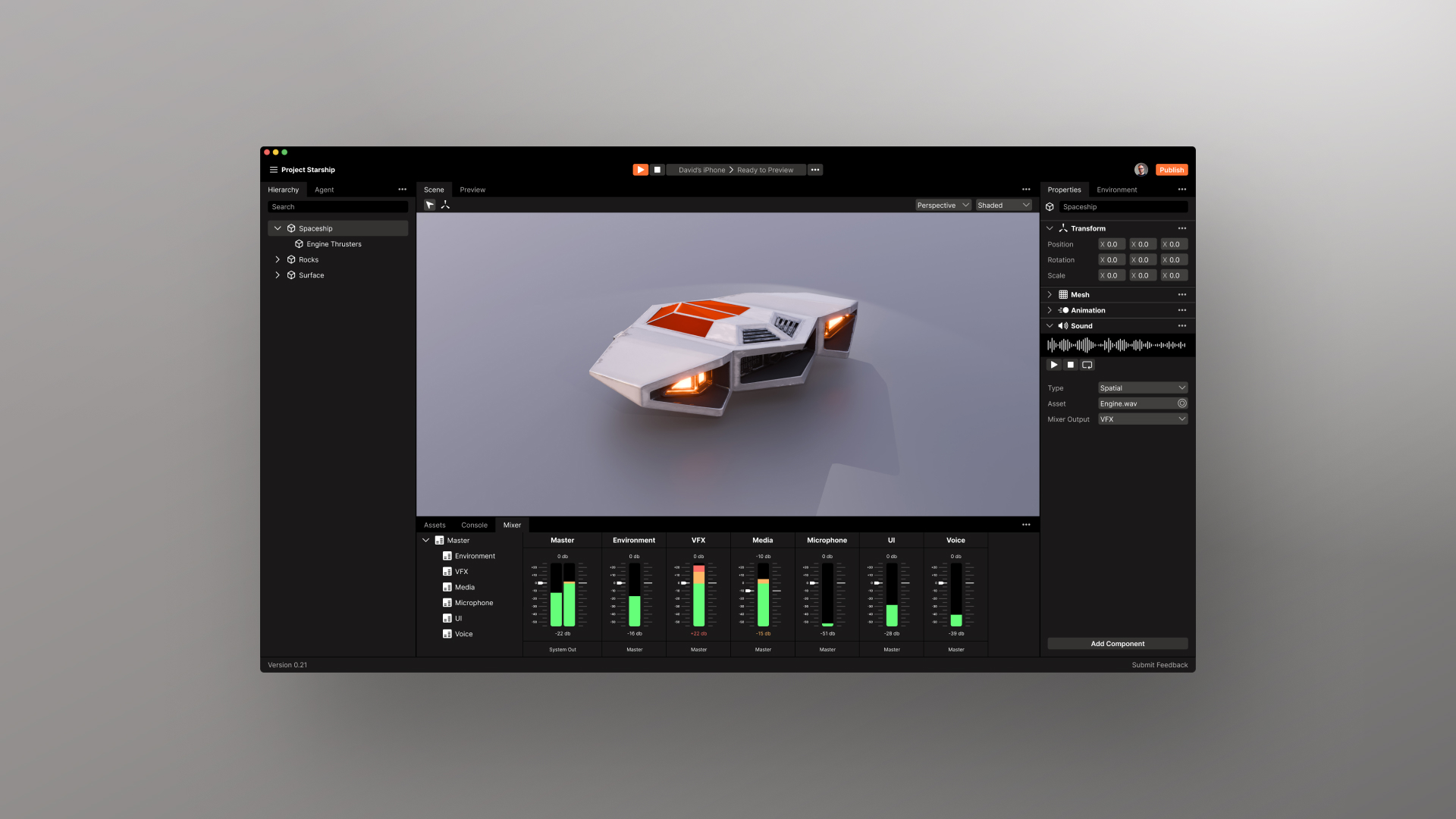


Game engines give creators extraordinary power, but with that power comes extraordinary complexity. They also serve many different types of creators, from hobbyists to indie developers to professional AAA teams with a mix of designers, artists and programmers, all with different needs, mental models and levels of expertise.
How might we balance power vs approachability? How might we speed up the creative play loop to help users move faster? How does AI integrate into the workflows yet still give the user autonomy and the feeling of "I created this"?
This case study is an exploration of this space, heavily influenced from my work at Meta but taken further.
Work in progress. More to come.
(Desktop Recommended)
How should a game engine support people as they move from an idea to an interactive experience? The core loop for any creator in this space can be broken down to:
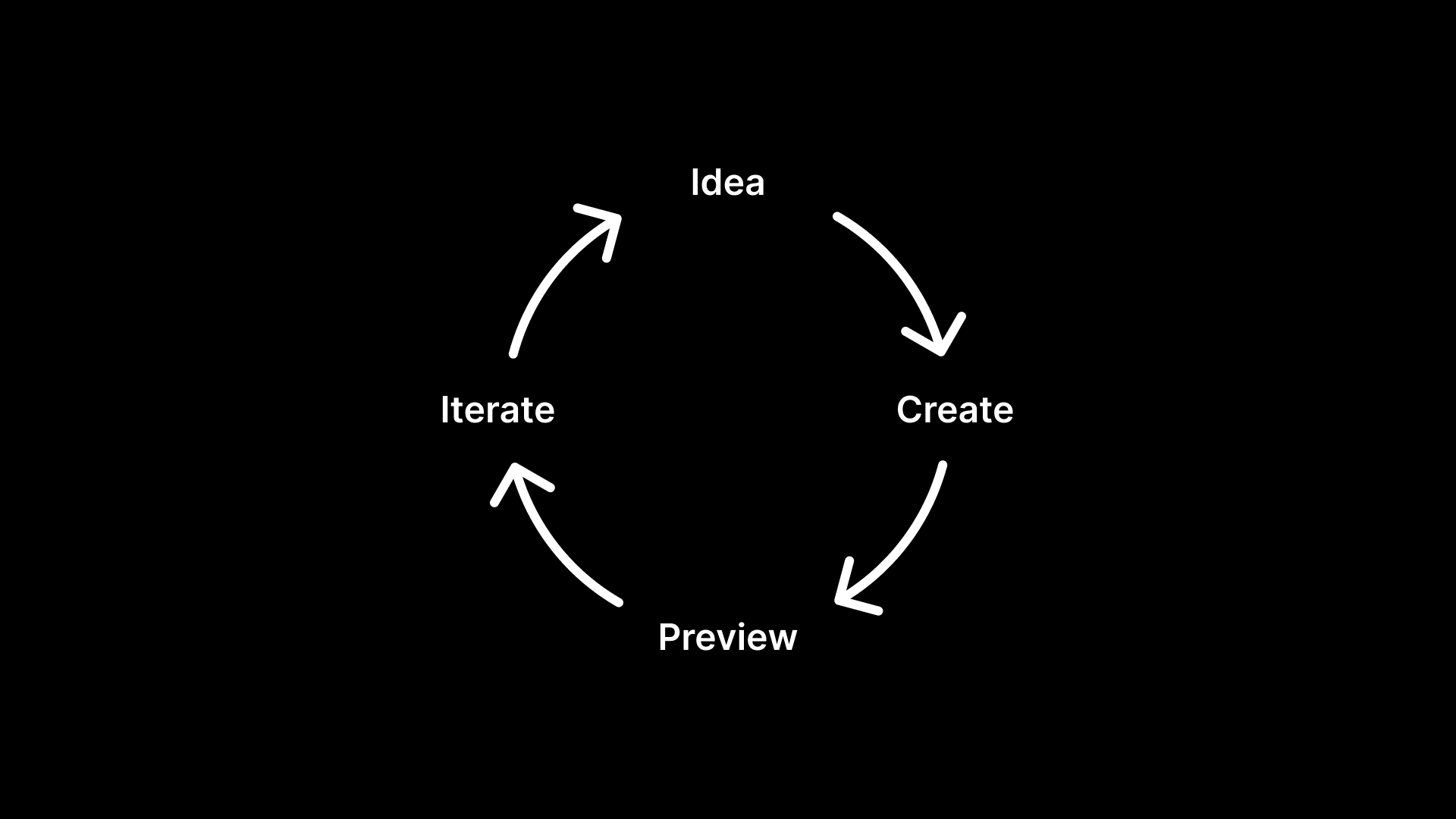
This core loop exists across multiple domains with a number of different types of users and varying levels of expertise and mental models:
In some cases, these roles can be spread across:
The challenge becomes clear. How do you balance the needs of all this with one tool? How do you cater for each of the individual workflows? How do you enable and empower the creative loop?
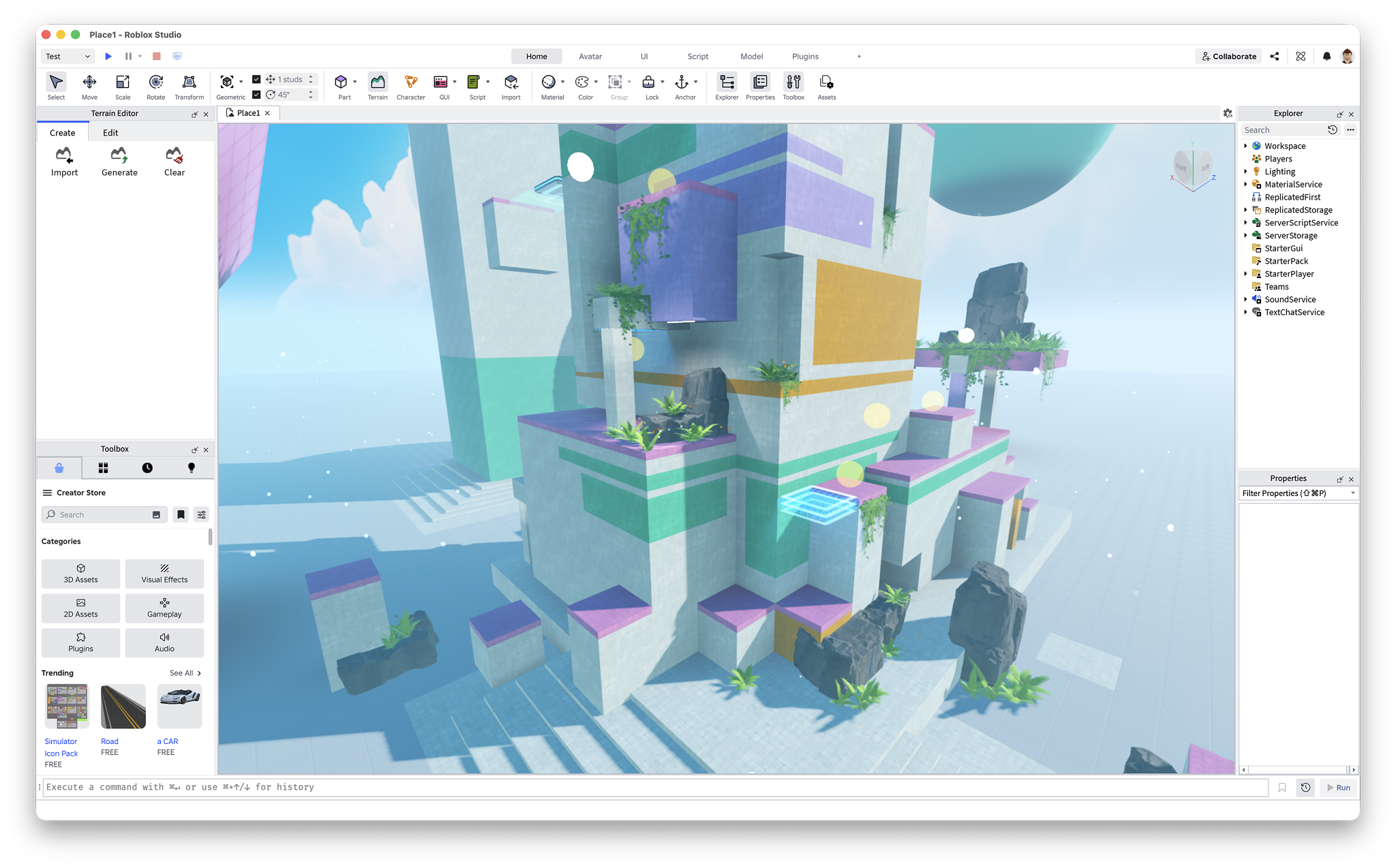
In the pro user market, there are two main players: Unreal Engine and Unity Engine. Serving more the Semi-Pro is Roblox, designed to be more approachable.
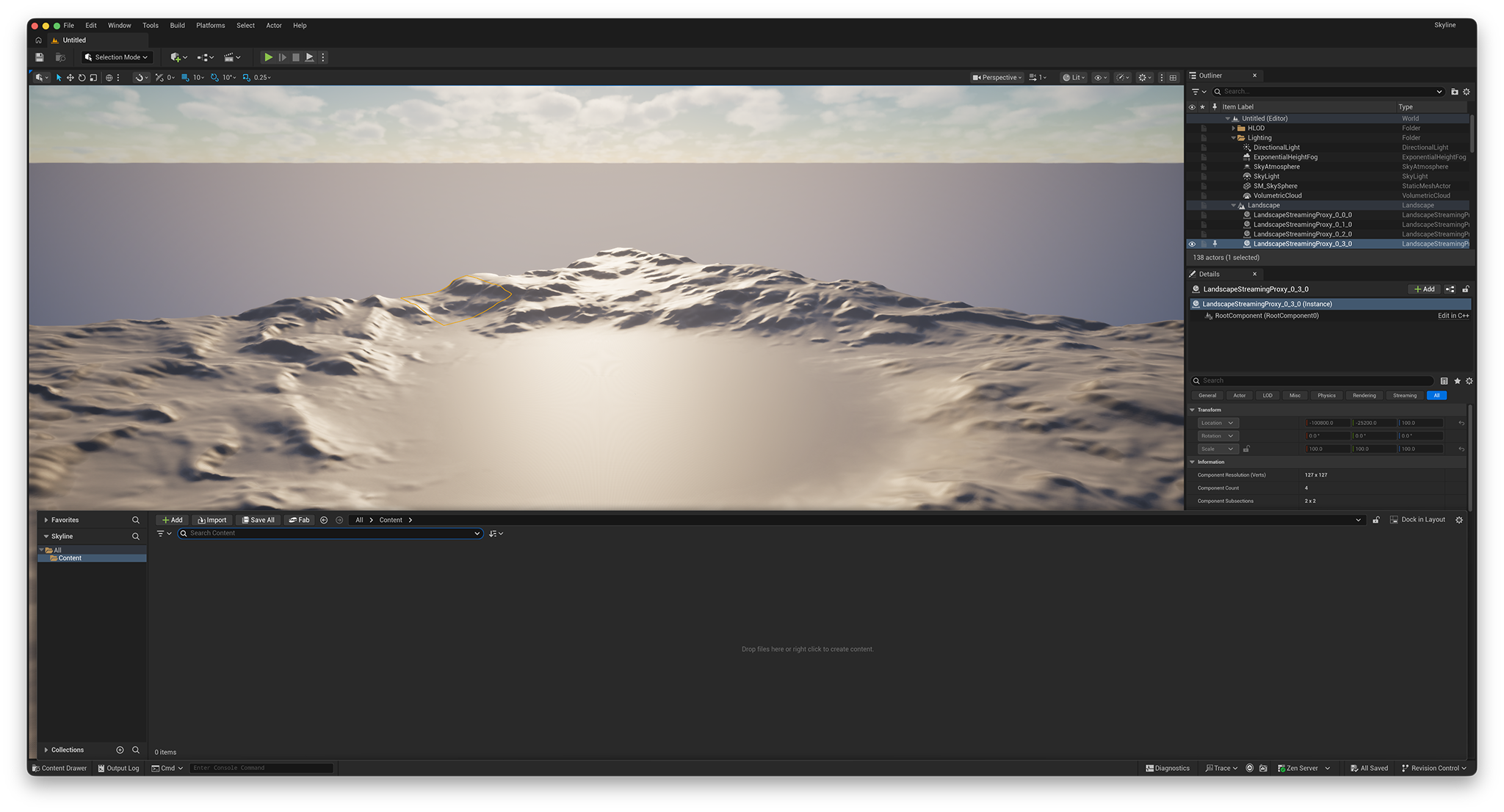
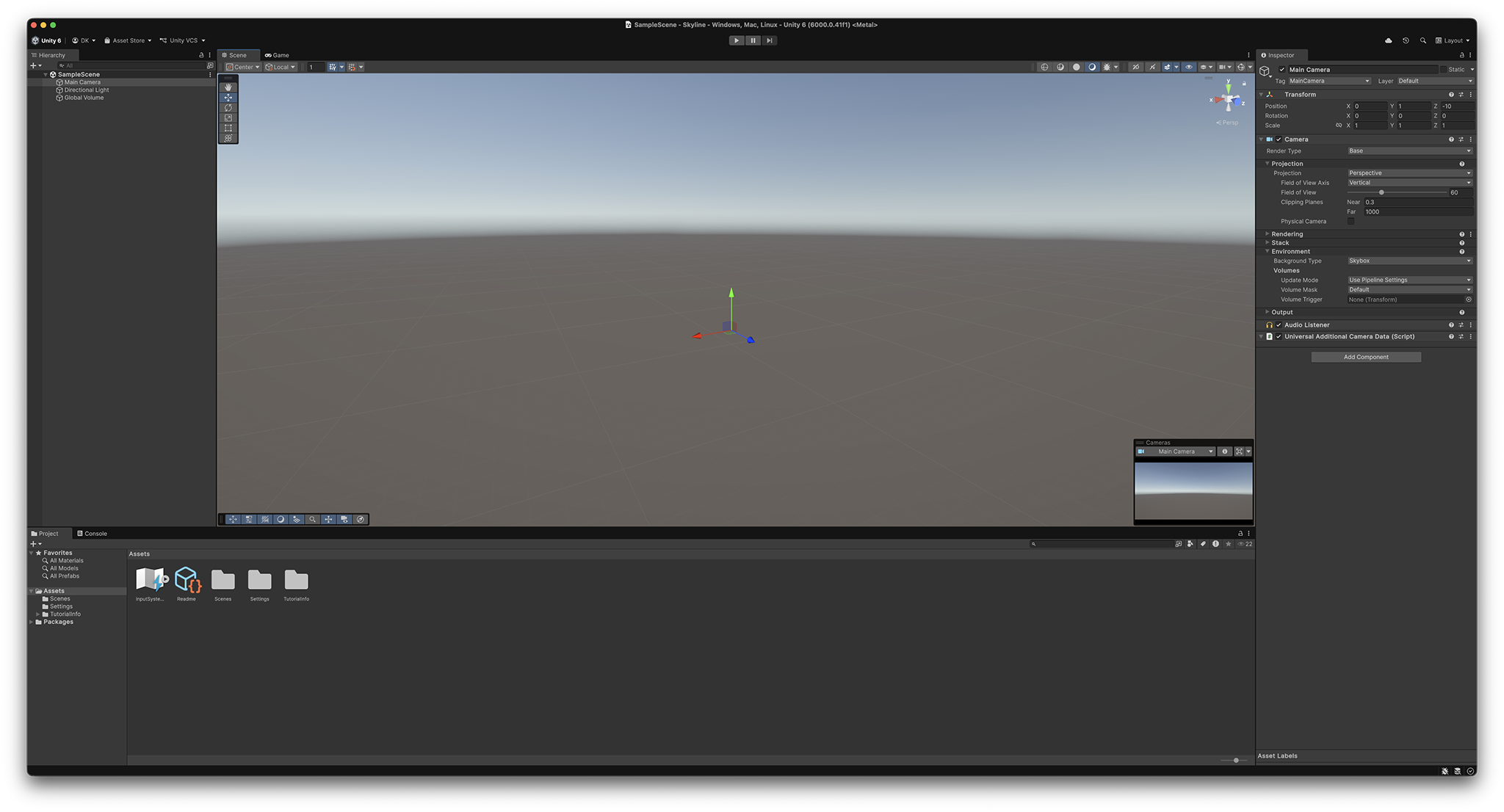
Initial exploration of a more traditional pro game engine tool.
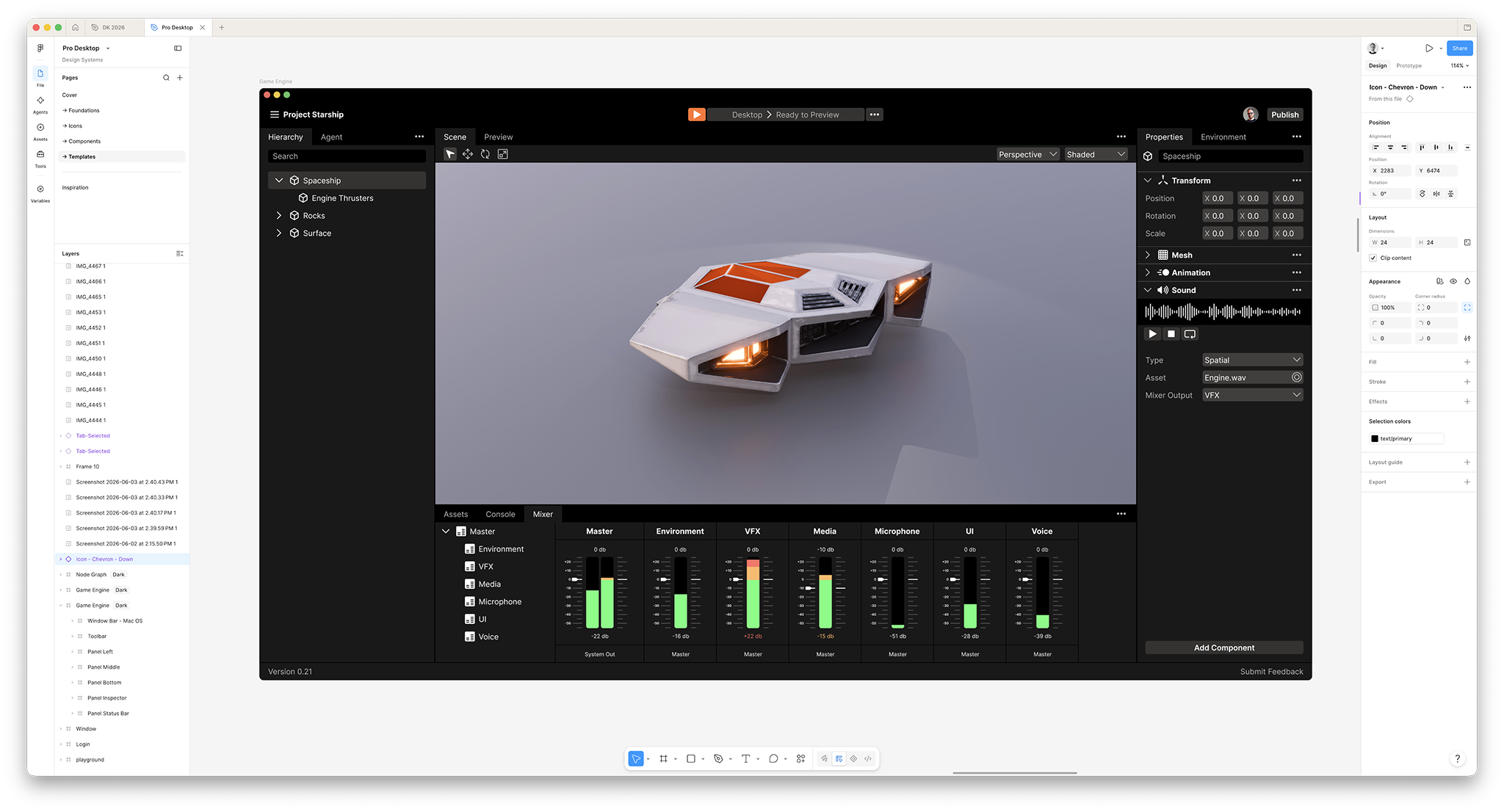
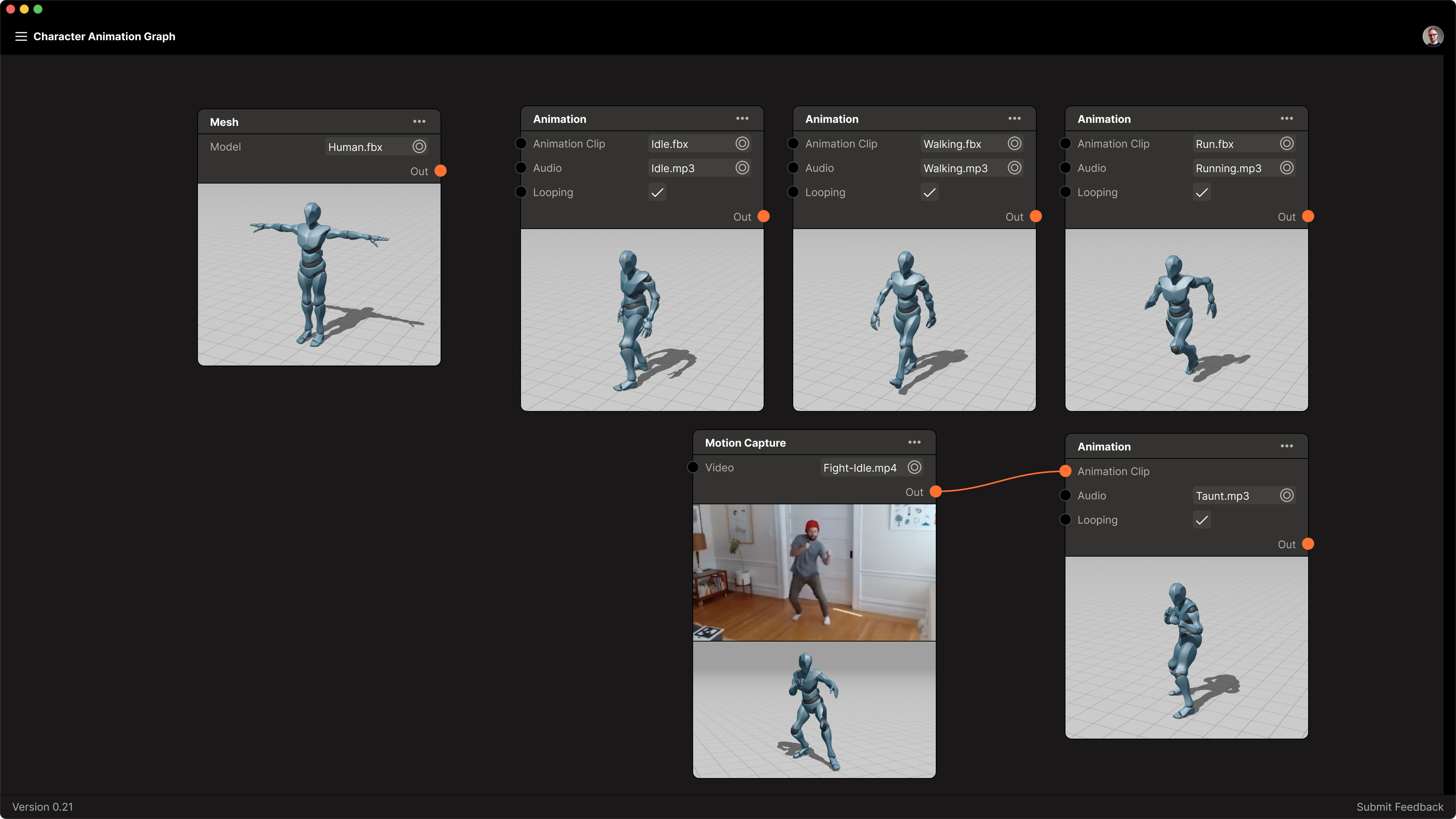
Build prototypes in AI using Figma MCP to Cursor AI. Create a real 3D viewport using Three.js and assets/animations from Mixamo.
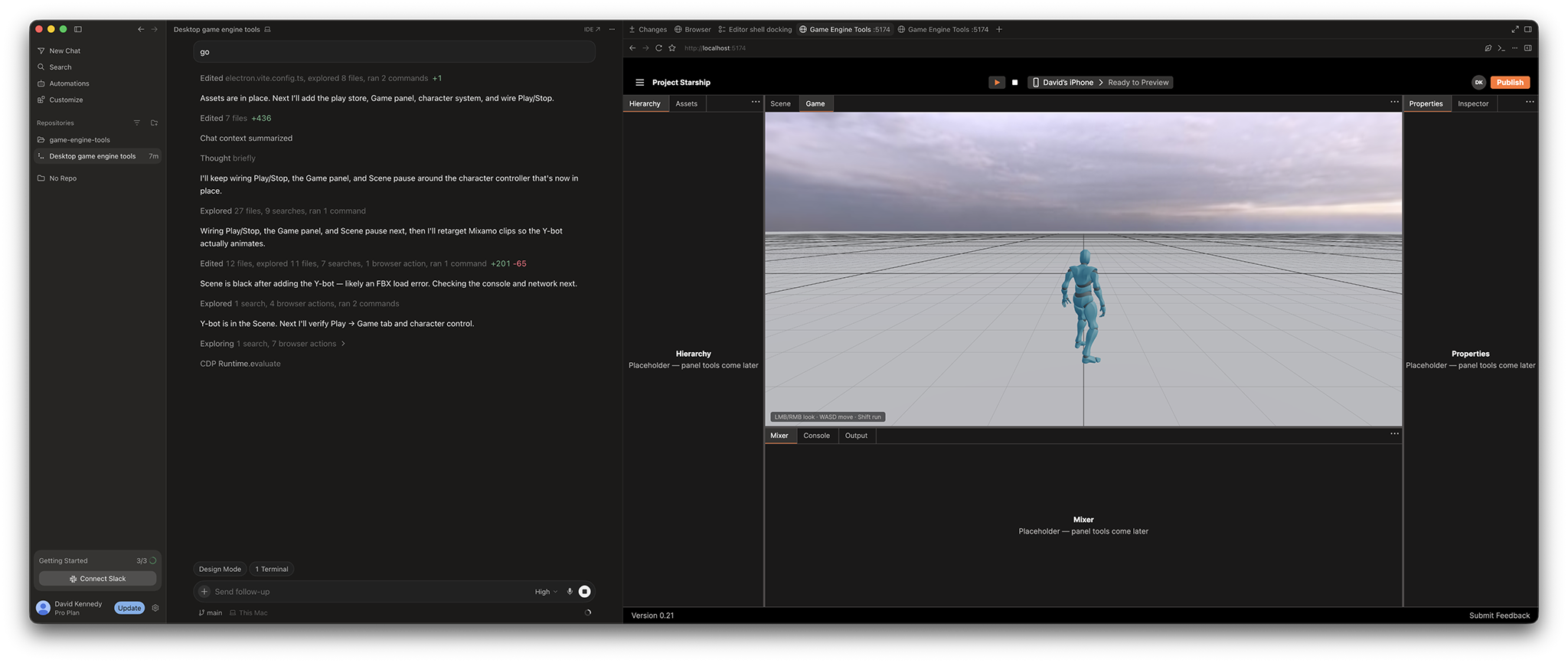
(Desktop Recommended)
https://dkennedy.github.io/skyline/
Work in progress, more coming soon ...


